
[text_block style=”style_1.png” align=”left”]
Course Descriptions
[/text_block]
[text_block style=”style_1.png” align=”left” font_size=”20″ font_font=”Adamina”]
Click the links below to read more about each course and to sign up.
[/text_block]
[text_block style=”style_1.png” align=”left” font_size=”20″ font_font=”Adamina”]
If you are looking for a course that you already signed up for, click the Login link.
[/text_block]
[text_block style=”style_1.png” align=”left” font_size=”20″ font_font=”Adamina”]
It’s also possible that the page you are trying to access requires a membership subscription
To get one, CLICK HERE
[/text_block]
[text_block style=”style_1.png” align=”left”]
Free Courses:
[/text_block]

[text_block style=”style_1.png” align=”left” font_size=”26″ font_font=”Adamina”]Ear Training for Piano Tuners – Free Version[/text_block]
[text_block style=”style_1.png” align=”left”]There are many skills required to tune a piano by ear. This course focuses primarily on improving and testing your “Tuner’s Ear”. Being able to clearly hear small differences in beat speeds is a required skill if you are to be able to tune a piano by ear.[/text_block]

[text_block style=”style_1.png” align=”left” font_size=”26″ font_font=”Adamina”]Piano Tuning Myths[/text_block]
[text_block style=”style_1.png” align=”left”]This is what started it all. A search to determine what information out there pertaining to piano tuning was actually accurate, relevant, and true. This course busts many preconceived ideas about piano tuning that make it unnecessarily difficult to learn piano tuning. Many of these ideas are still perpetuated by well meaning technicians and piano technology instructors and formal schools today. If you want to be efficient in your learning, you NEED to understand these myths and why they are wrong.[/text_block]

[text_block style=”style_1.png” align=”left” font_size=”26″ font_font=”Adamina”]Aptitude Tests[/text_block]
[text_block style=”style_1.png” align=”left”]While learning to tune and repair pianos through howtotunepianos.com is the most efficient and least expensive way to learn, let me save you time and money by pre-qualifying you to take these courses. There’s a chance that your skills and aptitude may not align with those that this profession demands.[/text_block]
[text_block style=”style_1.png” align=”left”]
Paid Courses:
[/text_block]

[text_block style=”style_1.png” align=”left” font_size=”26″ font_font=”Adamina”]Basic Piano Tuning Theory[/text_block]
[text_block style=”style_1.png” align=”left”]In order for you to understand the following piano tuning courses, you need to have a minimum understanding of piano tuning theory which includes basic music theory. If you were not able to pass the Piano Tuning Theory Test, then it is strongly recommended that you take this course and retake the theory test and pass it, before taking any of the following courses.[/text_block]

[text_block style=”style_1.png” align=”left” font_size=”26″ font_font=”Adamina”]Basic Piano Tuning Method[/text_block]
[text_block style=”style_1.png” align=”left”]These are videos that follow the basic method that I explain in my Basic Piano Tuning Manual. This method is recommended for anyone who has difficulty understanding the elements of the Go APE Aural Piano Tuning System which is described in the courses above.[/text_block]
[text_block style=”style_1.png” align=”left” font_size=”26″ font_font=”Adamina”]The Go APE Aural Piano Tuning System[/text_block]
[text_block style=”style_1.png” align=”left”]The courses listed here are from an old course that wasn’t finished. I left it here just for interest. It is not finished. Virtually all the courses (except the Basic Tuning Course) are about the Go A.P.E. Aural Piano Tuning System.[/text_block]
[text_block style=”style_1.png” align=”left” font_size=”26″ font_font=”Adamina”]How to Get Superior Stability in Piano Tuning[/text_block]
[text_block style=”style_1.png” align=”left”]Learn how to analyze the Non-Speaking Length Tension in order to produce tunings that even the most powerful pianist will not budge.[/text_block]

[text_block style=”style_1.png” align=”left” font_size=”26″ font_font=”Adamina”]
Bisecting Beat Speed Windows –
F3F4 One Pass Equal Temperament Sequence
[/text_block]
[text_block style=”style_1.png” align=”left”]Learn how to set equal temperament in one pass using the most accurate and efficient temperament sequence known. This sequence corrects errors as you tune and produces accurate pitches that do not need to be corrected.[/text_block]
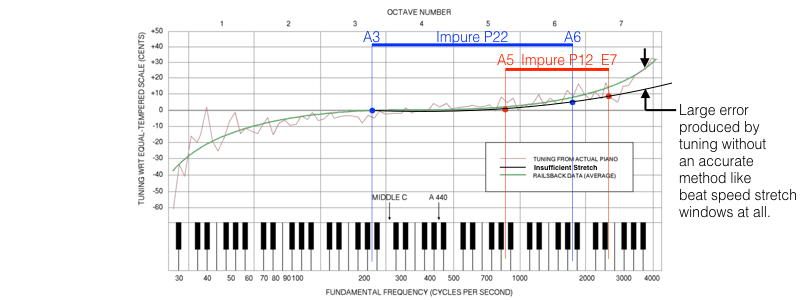
[text_block style=”style_1.png” align=”left” font_size=”26″ font_font=”Adamina”]Bisecting Beat Speed Windows –
Accurate and Efficient Bass and Treble Stretch[/text_block]
Accurate and Efficient Bass and Treble Stretch[/text_block]
[text_block style=”style_1.png” align=”left”]Learn how to set treble and bass pitches that produce multiple pure intervals on any size piano efficiently and accurately.[/text_block]

[text_block style=”style_1.png” align=”left” font_size=”26″ font_font=”Adamina”]
Bisecting Beat Speed Windows –
One Pass Pitch Raise/Pitch Drop
[/text_block]
[text_block style=”style_1.png” align=”left”]Learn how to use the self correcting power of Beat Speed Windows to produce accurate and efficient tunings, even when the piano is not at concert pitch.[/text_block]

[text_block style=”style_1.png” align=”left” font_size=”26″ font_font=”Adamina”]
Double String Unison (DSU) Open Unison Technique
[/text_block]
[text_block style=”style_1.png” align=”left”]DSU allows you to make the smallest adjustments in pitch, allowing you to set extremely accurate and precise pitches when tuning. Also, it allows you to know exactly when your hammer movement has caused the pitch to change, allowing you to know more fully, exactly how your hammer technique is working. You can also confirm if the pitches are stable much more easily and without hard test blows. Imagine being able to set an accurate pitch with only one movement of the hammer. With DSU, this is all possible.[/text_block]

[text_block style=”style_1.png” align=”left” font_size=”26″ font_font=”Adamina”]Piano Tuning Recordings[/text_block]
[text_block style=”style_1.png” align=”left”]Watch and learn as I tune many different pianos using the Go APE Aural Piano Tuning System. Most recordings come with step by step instructions right on the screen, and/or I am verbally instructing you what I am doing each step of the way.[/text_block]
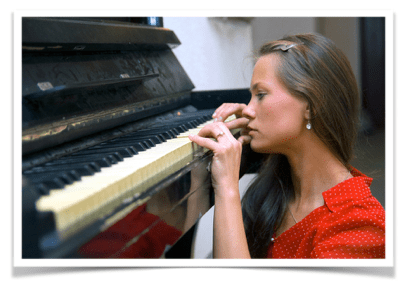
[text_block style=”style_1.png” align=”left” font_size=”26″ font_font=”Adamina”]Piano Regulation and Voicing[/text_block]
[text_block style=”style_1.png” align=”left”]This course includes videos that describe the basic steps needed to regulate upright and grand pianos. It also includes the video on the Regulation Triangle; a simple method to help technicians easily visualize how the regulation adjustments affect each other and how to set them so the feel is optimal.[/text_block]

[text_block style=”style_1.png” align=”left” font_size=”26″ font_font=”Adamina”]Piano Repair[/text_block]
[text_block style=”style_1.png” align=”left”]This course contains videos that show the most common repairs like replacing/repairing hammers, keys, strings, etc.[/text_block]

[text_block style=”style_1.png” align=”left” font_size=”26″ font_font=”Adamina”]Recorded Classes[/text_block]
[text_block style=”style_1.png” align=”left”]This is a collection of recorded Skype classes with students. The topics concern the Go APE Aural Piano Tuning System and are therefore different and more current than the recorded classes in the Basic Piano Tuning Course.[/text_block]

Click to go back to the home page