
Watch the Complete Go APE Live Piano Tuning Below
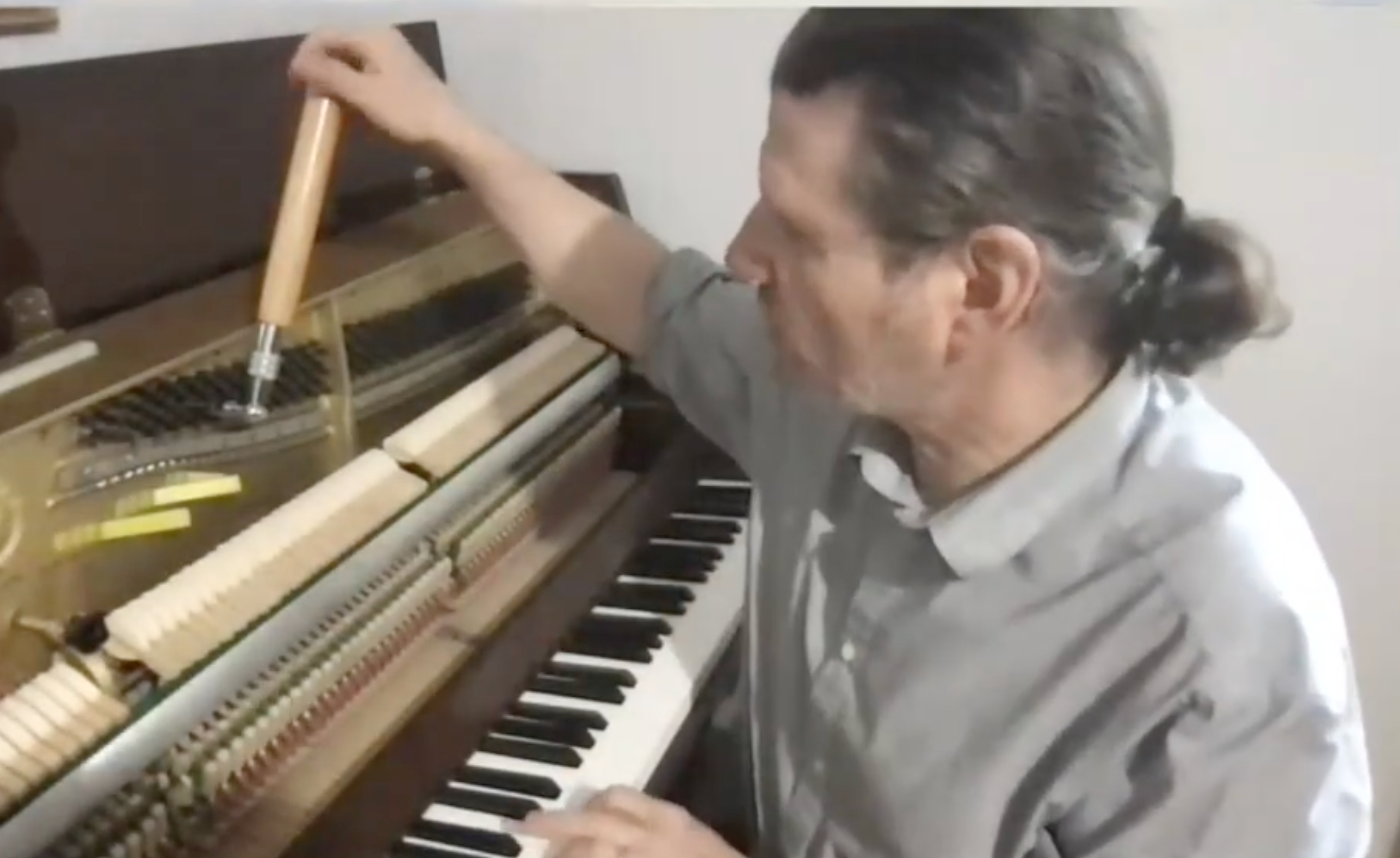
Watch me tune a piano from start to finish while I explain what I’m doing, what I’m listening for, why I’m doing it, and how I know whether it worked.
Watch the Complete Tuning
This is the complete recording of the live Zoom presentation. There is a lot here, so don't worry about understanding every concept the first time through.
Mark Cerisano, APTE, RPT, B.Sc.(Mech.Eng.), Dip.Ed Founder and Head Instructor, International Piano Technicians School https://IPTS.online
Clicking a chapter starts the recording at that point and scrolls back to the video.
If this recording created more questions than answers, I want to help.
Here are 5 great reasons to book a call right now:
- Have questions about the tuning you just watched?
Ask me anything about what I did, what you heard, or why I did it. - Not sure where to go from here?
Let’s talk about where you are now, your goals, and where you’d like your tuning to be. - Struggling with something in your tuning?
Tell me what’s giving you trouble and let’s see if I can help. - Wondering if the Go APE System is right for you?
We can talk about what you want to accomplish and whether the system makes sense for you.
- Just want to talk piano tuning?
That’s fine too.
No obligation. No pressure to buy anything. We’ll simply talk about your tuning and your goals.
A Complete Piano Tuning With Every Step Explained
This wasn't simply a video of me tuning a piano. I stopped throughout the tuning to explain what I was doing, why I'm did it, what I was listening for, and how I knew whether it was right or wrong.

Choosing the Right Temperament Sequence
I measured the piano and chose between different temperament sequences instead of assuming one sequence works for every piano.

Beat Speed Windows
I turned vague instructions like “make the fourth wide” into something much more precise using slow, medium and fast beat-speed relationships.

Double-String Unisons
Double-string unisons reduces hunt-and-peck tuning, increases precision, and gives constant practice producing clean unisons.

Stability Technique
I tested whether a string was actually stable while I’m tuned it and I used a troubleshooting technique to fix it if it moved.

Weinreich Drift
You saw what can happen when you add other strings to the first string already tuned. It can causes the final unison to move. You saw how the system helps catch that drift and fixes it.

Auditory Illusion
There were real examples of how my ear fooled me and you learned about the procedures I used to keep from blindly trusting what my ear seemed to be telling me.

Troubleshooting Unisons That Did’t Tune Clean
I identified problems that were not caused by my tuning, and showed you how to deal with it.

Stretch and Bass Tuning
You learned how I used specific interval relationships, pure intervals, beat matching and natural beats instead of simply guessing what sounded good.
The Go APE System in Action
No theory without application. Make decisions on a real piano as they happen. How to deal with mistakes, corrections, troubleshooting and changes made during the tuning.
Don't Try to Memorize Everything
There is far too much information in this demonstration to absorb in one sitting.
The goal is to see how the pieces of the Go APE System work together and how having a procedure for each problem changes the way you approach a piano.
You can return to the recording and watch individual sections again.
See What Happened When Other People Learned the System
These are people who wanted more confidence, better answers and a clearer way to understand piano tuning.
Three different testimonials are selected randomly each time the page loads.
If You Still Have Questions, Let's Talk
If this demonstration left you wanting to understand more, book a free call. Bring your questions. What are you struggling with? What do you want to accomplish? There is no obligation and no pressure to buy anything.
Book a Free Tuning Call